How To Make Cookies With Pantry Ingredients
A practical step-by-step guide to how to make cookies with pantry ingredients, including preparation, instructions, common issues, tips, and next steps.
How To Make Cookies With Pantry Ingredients
Making cookies from pantry ingredients is a simple, rewarding project that requires no special tools or fresh groceries. With basic staples like flour, sugar, butter (or oil), eggs (or a substitute), and flavorings, you can produce soft, chewy cookies in under an hour. This guide walks you through measuring, mixing, shaping, and baking, with troubleshooting tips and variations to suit your taste and what you have on hand.
Fast Answer
- Preheat oven to 375°F (190°C) and line a baking sheet with parchment paper.
- Cream softened butter and sugar, beat in egg and vanilla, then stir in dry ingredients. Drop spoonfuls onto the sheet and bake for 10-12 minutes until edges are golden.
Before You Start
- Gather all ingredients: flour, baking soda, salt, butter (or oil), sugar, brown sugar (or more white sugar), an egg (or flax egg), and vanilla extract (or other flavoring).
- Measure out all dry ingredients into a small bowl and whisk together to combine evenly, ensuring the leavener is distributed throughout the flour.
- Soften butter to room temperature by leaving it out for 30 minutes, or microwave in 5-second bursts if you are short on time, but do not melt it completely.
- Preheat your oven to 375°F (190°C) and position a rack in the center. Line two baking sheets with parchment paper or silicone mats to prevent sticking.
Step-by-Step Instructions
Measure and Mix Dry Ingredients
In a medium bowl, whisk together 2 cups (250g) all-purpose flour, 1/2 teaspoon baking soda, and 1/2 teaspoon salt. Whisking not only combines these ingredients evenly but also aerates the flour, which helps create a lighter texture. Use a dry measuring cup to scoop the flour and level it with a knife; do not pack it down, as that can add extra flour and make cookies dry. Once mixed, set the bowl aside while you prepare the wet ingredients. This ensures that when you add the dry to the wet, the leavener is evenly distributed, preventing pockets of baking soda that can taste bitter. A quick check: run your finger through the mixture—it should be uniform in color with no visible streaks of white baking soda.
Cream Butter and Sugars
In a large bowl, using an electric mixer on medium speed, beat 1/2 cup (1 stick, 113g) softened butter with 1/2 cup (100g) granulated sugar and 1/2 cup (100g) packed brown sugar until light and fluffy, about 2-3 minutes. This process incorporates air into the mixture, which makes cookies puffier. If you don't have brown sugar, you can use all white sugar, but the cookies will be less chewy. If your butter is too cold, it won't cream properly; if it's melted, the cookies will spread too much. The texture should resemble a smooth paste with no visible butter lumps. Scrape down the sides of the bowl occasionally to ensure even mixing. Properly creamed mixture is key to a tender crumb, so don't rush this step.
Add Egg and Vanilla
Beat in 1 large egg and 1 teaspoon vanilla extract until fully combined, about 30 seconds. The mixture may look curdled at first, but that's normal if your butter was firm; keep mixing until it comes together smoothly. The egg provides moisture and structure, helping bind the dough. If you need an egg substitute for allergy or scarcity, mix 1 tablespoon ground flaxseed with 3 tablespoons water and let sit for 5 minutes to create a gel-like mixture. Vanilla adds flavor, but you can omit it or replace with almond extract, lemon zest, or even a pinch of cinnamon. All-purpose flour is the best choice, but bread flour will yield chewier cookies and cake flour will yield softer, more delicate ones. If you don't have a scale, the most accurate way is to spoon the flour into your measuring cup and level it off.
Combine Dry and Wet Ingredients
With the mixer on low speed, gradually add the dry flour mixture to the butter mixture, mixing until just barely combined. You should see a few streaks of flour when you stop; this is the moment to stop mixing. Overmixing at this stage develops gluten in the wheat flour, which makes cookies tough and bread-like instead of tender. If you don't have a mixer, use a wooden spoon or rubber spatula and fold the flour in gently, turning the bowl as you go. The dough should be soft, slightly sticky, and hold together when pressed. If it seems too dry, add 1 tablespoon of milk or water; if too wet, add an extra tablespoon of flour. This is also the time to add mix-ins like chocolate chips, nuts, or dried fruit—gently fold them in so they are distributed throughout.
Shape the Cookie Dough
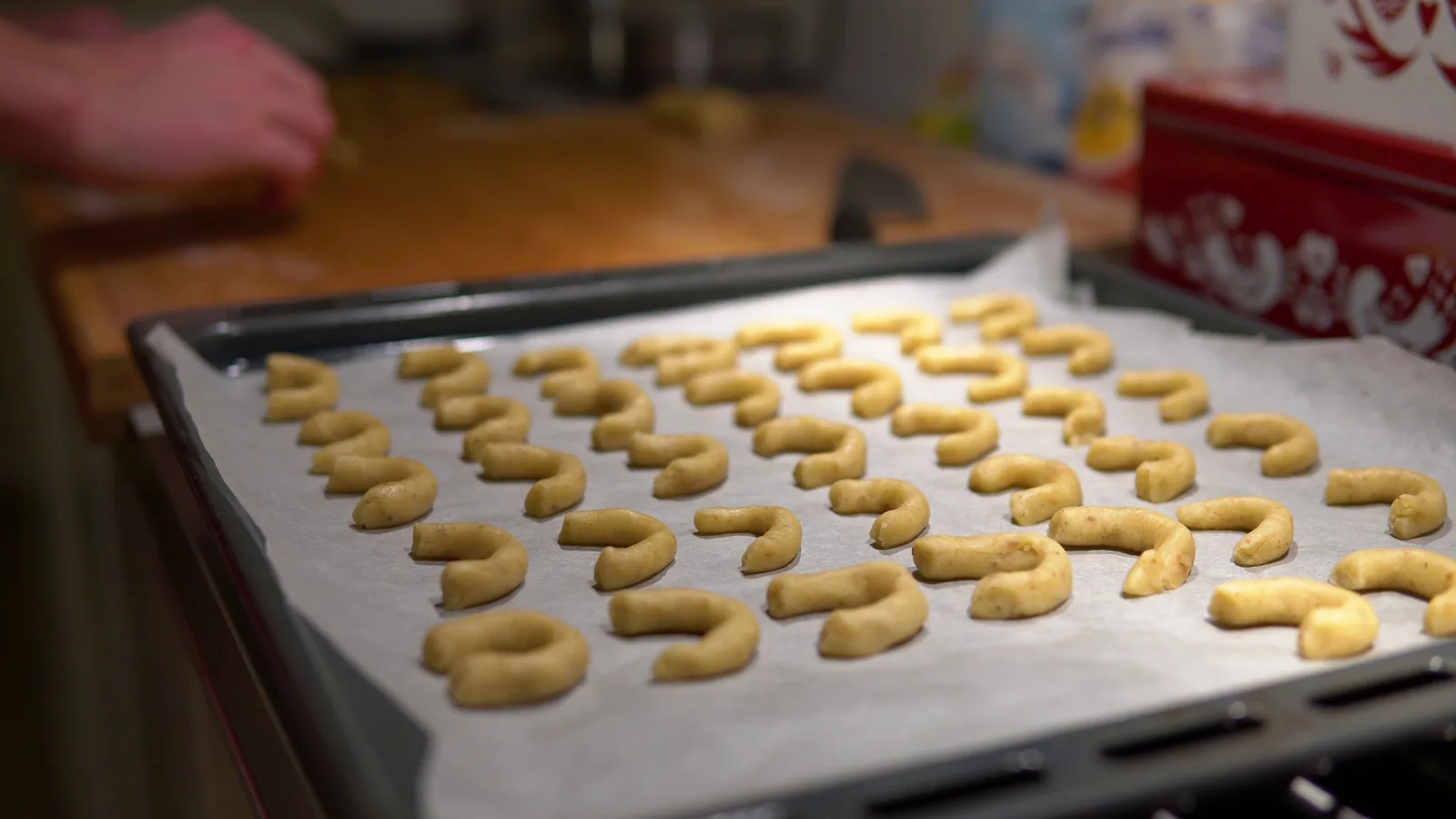
Using a spoon or a cookie scoop, drop rounded tablespoons of dough onto the prepared baking sheets, spacing them about 2 inches apart. For uniform cookies, use a small ice cream scoop or roll the dough into balls with your hands. If you want thinner, crispier cookies, flatten the balls slightly with the palm of your hand. For thicker, chewier cookies, leave them mounded. Chilling the dough for 30 minutes before baking can reduce spreading and enhance flavor, but it's optional. At this point, you can also freeze the dough balls on a tray until solid, then transfer to a freezer bag for later; bake frozen cookies for 2-3 extra minutes. Work with small batches to keep the dough cold, especially if your kitchen is warm.
Bake and Cool
Place the baking sheets in the preheated oven and bake for 10-12 minutes, or until the edges are golden brown and the centers are just set. The cookies will look slightly underdone in the middle; that's perfect because they continue to cook from residual heat. Rotate the sheets halfway through if your oven bakes unevenly. Remove the sheets from the oven and let the cookies rest on the hot pan for 5 minutes—this allows them to firm up slightly without overbaking. Then transfer them to a wire rack to cool completely. Cooling on a wire rack allows air to circulate, preventing soggy bottoms. Store the cookies in an airtight container at room temperature for up to a week, or freeze for up to 3 months. Enjoy with a glass of milk or a cup of tea.
Quick Reference
| Situation | Action | Why it helps |
|---|---|---|
| Your cookies spread too much and turn flat. | Chill the dough in the refrigerator for 30 minutes before baking, and measure your flour by spooning and leveling to ensure you are not using too little. | Chilling solidifies the butter, which slows spreading during baking, while correct flour measurement provides enough structure to hold the cookies together. |
| Your cookies are hard and crunchy rather than soft and chewy. | Bake them for 1-2 minutes less and take them out when the center is still slightly soft; also ensure you are using enough brown sugar or add an extra egg yolk. | Underbaking leaves moisture in the center, and brown sugar retains moisture due to its molasses content, both leading to a softer texture. |
| You run out of eggs and need a substitute for your cookie dough. | Mix 1 tablespoon of ground flaxseed with 3 tablespoons of warm water and let it rest for 5 minutes until it becomes gel-like; use this mixture in place of one egg. | The flax gel mimics the binding and moisture properties of an egg, helping the cookies hold together and stay tender. |
Common Issues
- Cookies are dry and crumbly.: Next time, reduce the baking time by 1-2 minutes, or add an extra tablespoon of milk or water to the dough. Also, ensure you are measuring flour correctly by spooning it into the cup and leveling—using too much flour is a common cause.
- Cookies stick to the baking sheet.: Let the cookies cool on the sheet for 5-10 minutes so they firm up, then use a thin spatula to lift them off. Always use parchment paper or a silicone mat for easier release, and make sure the sheet is completely clean and dry.
- Cookies have an uneven color and don't bake evenly.: Rotate the baking sheet halfway through baking. Also, use the center rack of the oven and bake one sheet at a time, as placing two sheets can block heat. If your oven has hot spots, position the sheet accordingly.
Advanced Tips
- Browning the butter for a nutty flavor: melt butter in a saucepan over medium heat until it turns golden brown and smells nutty, then let it cool before creaming with sugar.
- For a chewy texture, replace one of the eggs with an egg yolk only; the extra yolk adds richness and moisture without extra protein that can make cookies tough.
- Use a cookie scoop to create uniform balls, then freeze them on a sheet until solid. Once frozen, transfer to a zip-top bag and bake directly from frozen, adding 2-3 minutes to the baking time.
Final Checklist
- All ingredients measured accurately using dry measuring cups and leveling tools.
- Oven preheated to 375°F (190°C) and rack placed in the center position.
- Baking sheets lined with parchment paper or silicone baking mats.
- Cookie dough scooped into uniform balls and spaced at least 2 inches apart.
FAQ
Can I use whole wheat flour instead of all-purpose flour?
Yes, you can substitute whole wheat flour, but your cookies will be denser and more nutritious. For best results, use white whole wheat flour or a 50-50 blend with all-purpose. You may also need to add 1-2 tablespoons of milk, as whole wheat flour absorbs more liquid.
How do I make my cookies softer and chewier?
To make softer, chewier cookies, use more brown sugar than white sugar, as brown sugar contains molasses which retains moisture. Also, bake the cookies for a shorter time—pull them out when the edges are set but the centers look slightly underdone. You can also add an extra egg yolk to the dough.
Can I prepare the cookie dough ahead of time and refrigerate it?
Absolutely. You can prepare the dough and keep it in the refrigerator for up to 72 hours. Wrap it tightly in plastic wrap or place in an airtight container. Chilling the dough for at least 30 minutes before baking results in better flavor and less spreading. You can also freeze the dough for up to 3 months; just thaw it in the refrigerator before baking or increase baking time by a few minutes if baking from frozen.